PIKAA
For you, at home
Offers what your medical team recommends, at a time that suits you, and keeps every choice about what is shared with you.
PIKAA listens at your own pace, answers with sources you can check, remembers only what you allow, and shares with your medical team only when you say yes.
A research prototype from the Pacific Parkinson’s Research Centre at UBC.
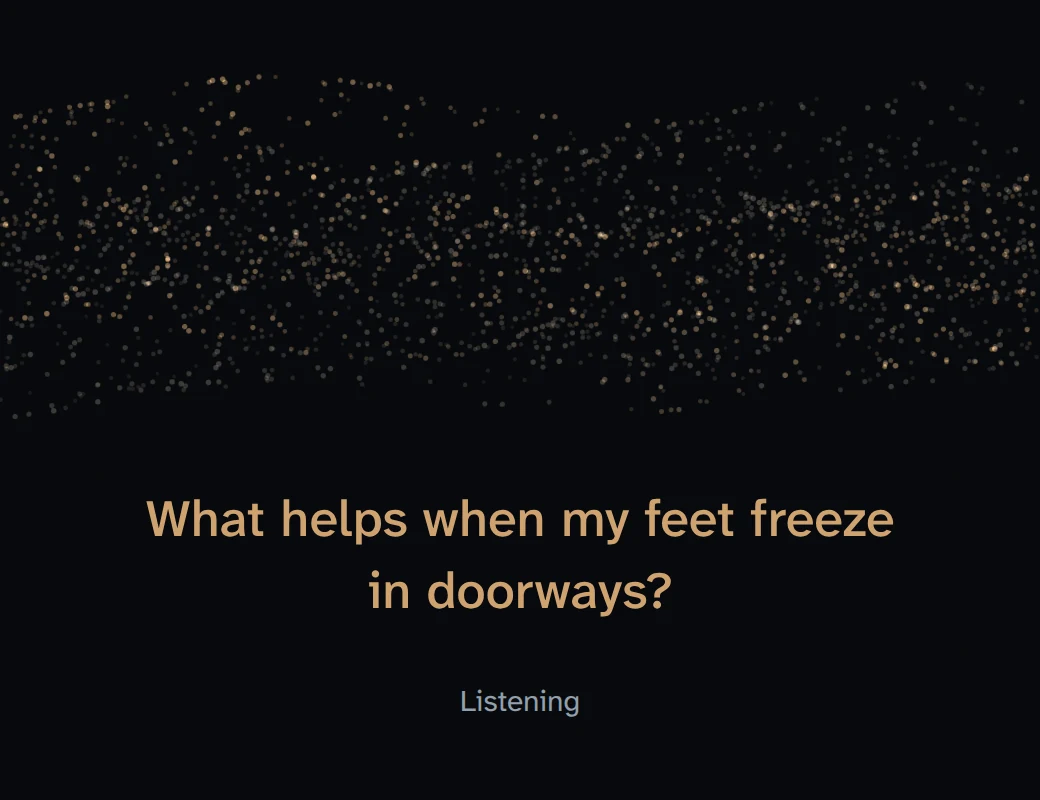
Speak naturally, pause when you need to. PIKAA waits.
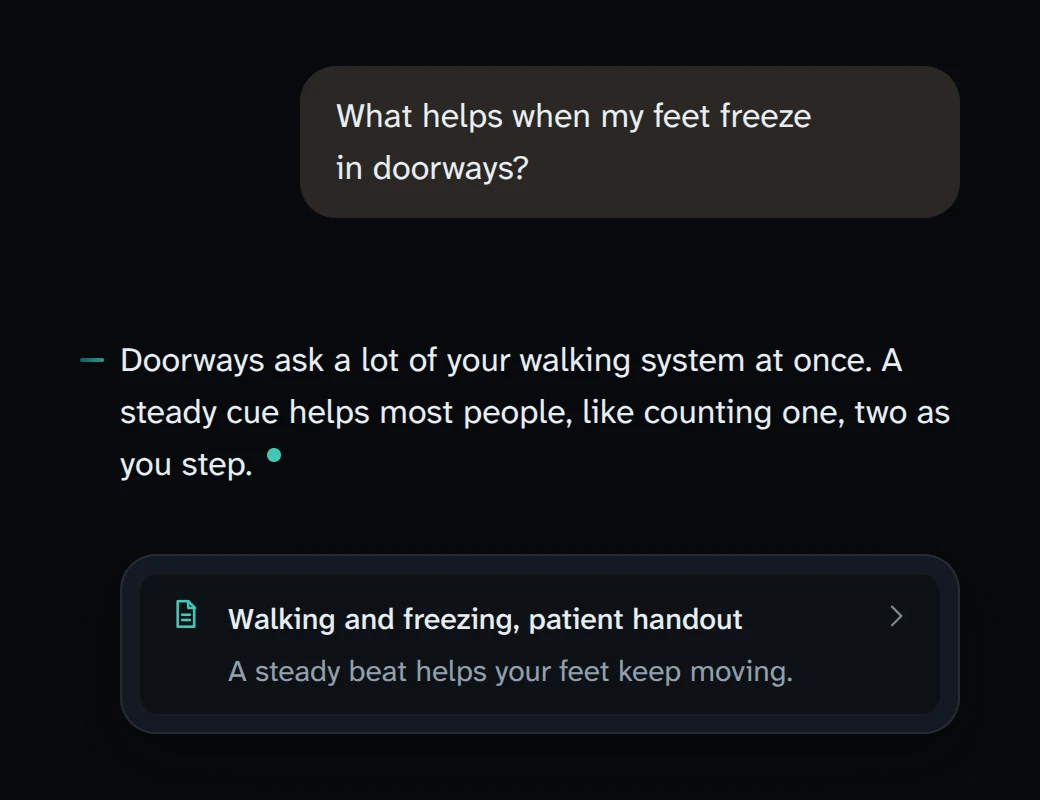
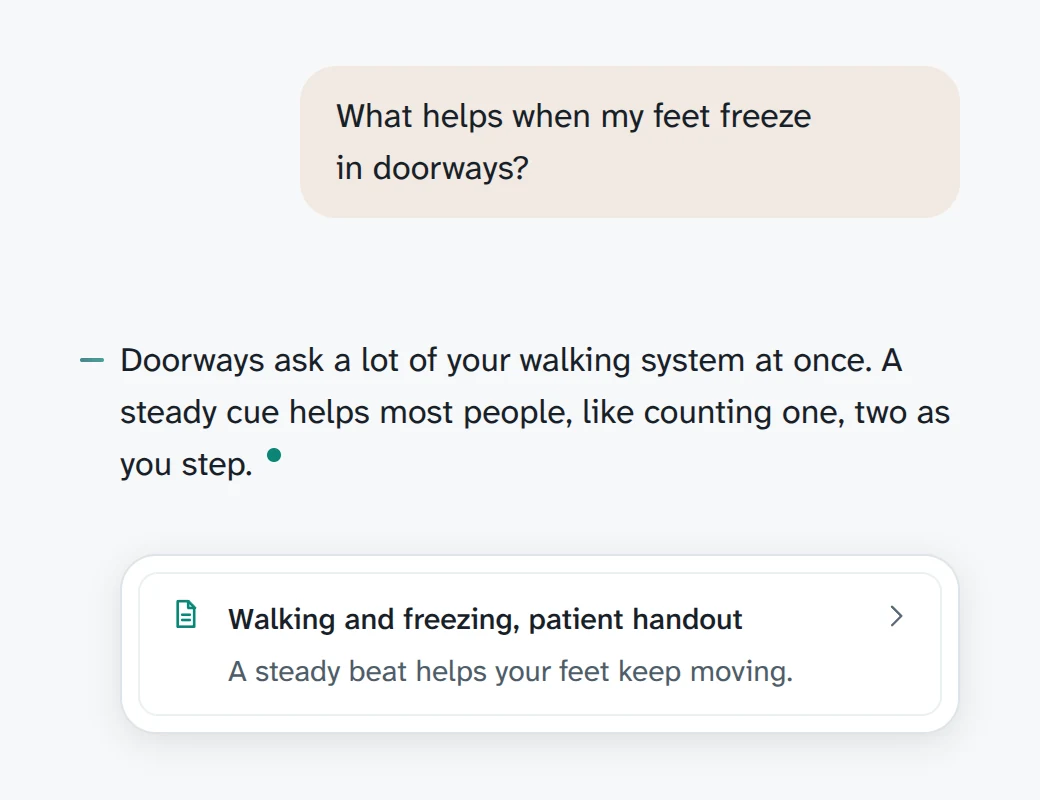
Plain words, with the source one tap away.
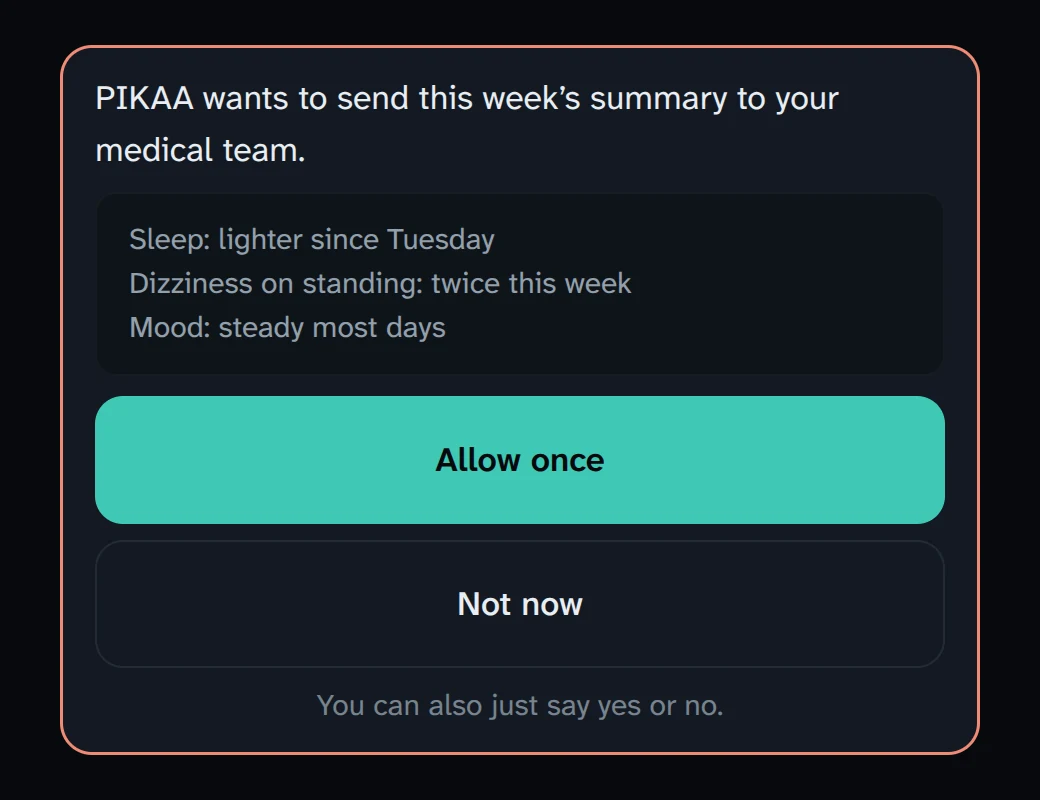
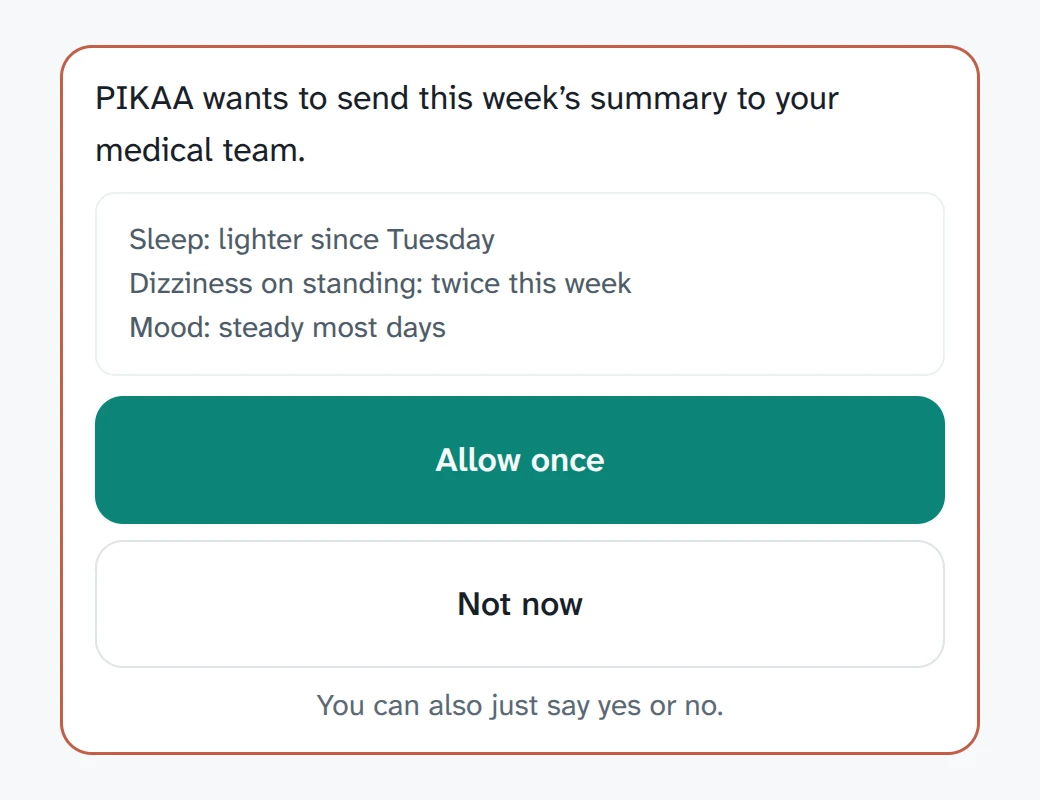
You see exactly what would go to your medical team, first.
What does PIKAA stand for?
A companion that understands Parkinson’s, knows where its answers come from, and turns a conversation into help that actually happens.
Built around the realities of living with Parkinson’s, with the clinicians who care for it.
Capable AI that works privately for you, not in someone else’s cloud.
Answers grounded in the clinic’s education library and in what you chose to tell it.
One calm voice that brings everything together, so there are no apps to juggle.
Check-ins, reminders and summaries that actually happen, always with your yes.
Why does it matter?
Parkinson’s brings far more than tremor and stiffness. It can touch sleep, mood, energy, balance, memory and much more, and it changes from day to day, mostly far from the clinic. Yet care still rests on visits months apart, and on what a person can remember in a short appointment.
PIKAA starts somewhere else: a conversation at home, at the person’s own pace, that quietly becomes useful to the people who care for them.
Who is it for?
A companion to talk with at any time of day. Ask questions, keep track of how you are doing, and get gentle reminders, all at your own pace.
Less guessing between visits. PIKAA is designed to keep the people who help informed, whenever the person chooses to share.
A clearer picture between appointments: check-ins you recommend, and summaries that patients review and approve before they are shared.
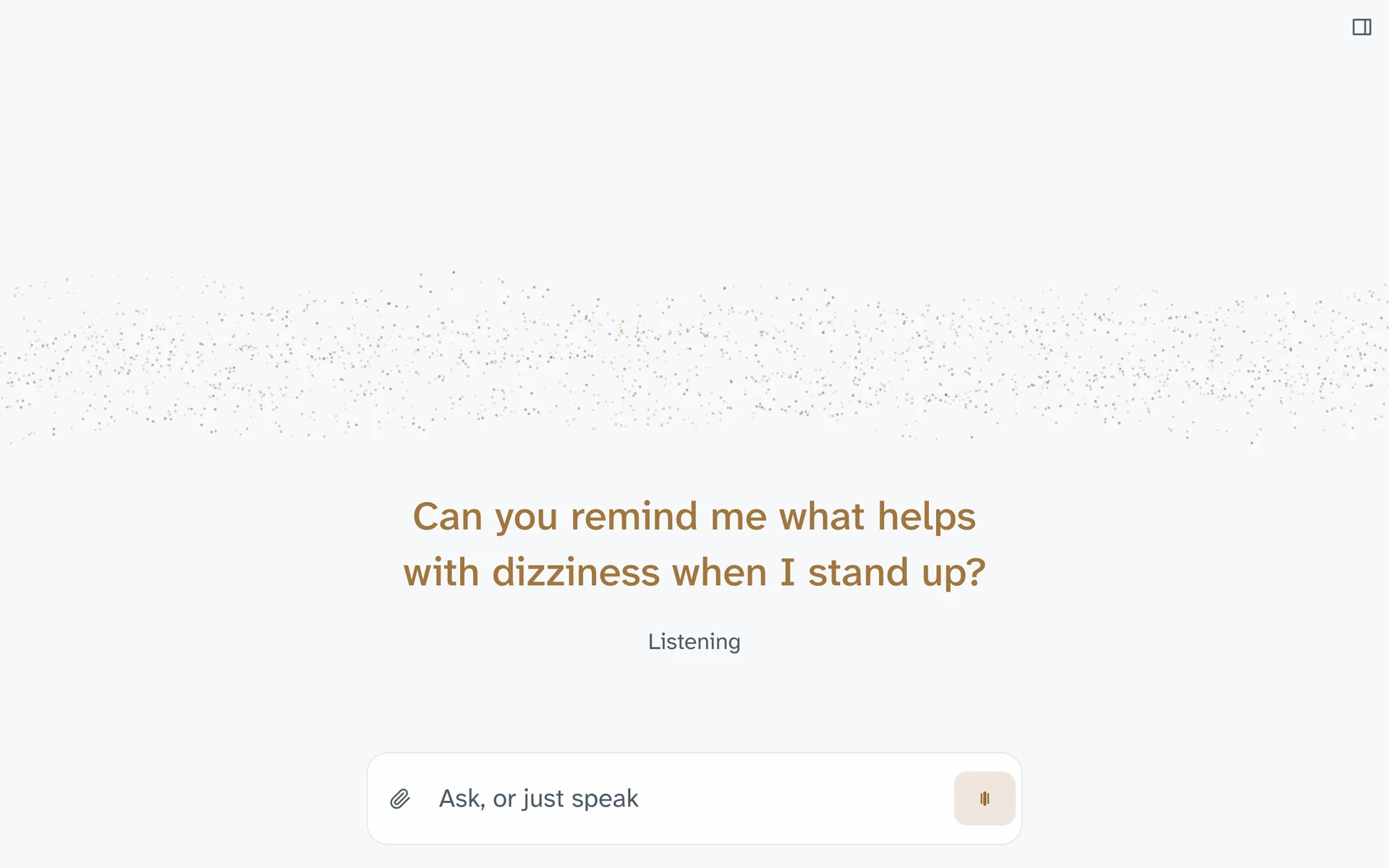
Shown: PIKAA’s light theme at its largest text size.
What can it do?
Questions, check-ins, reminders and summaries all happen in the same calm conversation, spoken or typed.
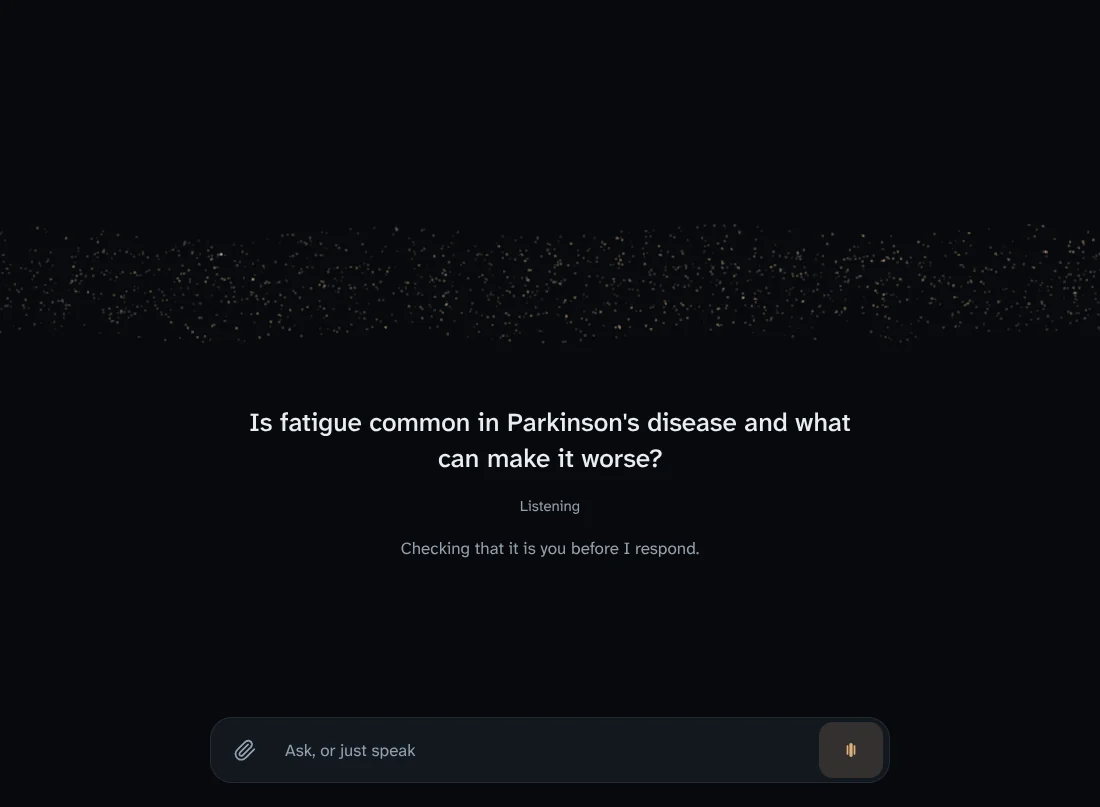
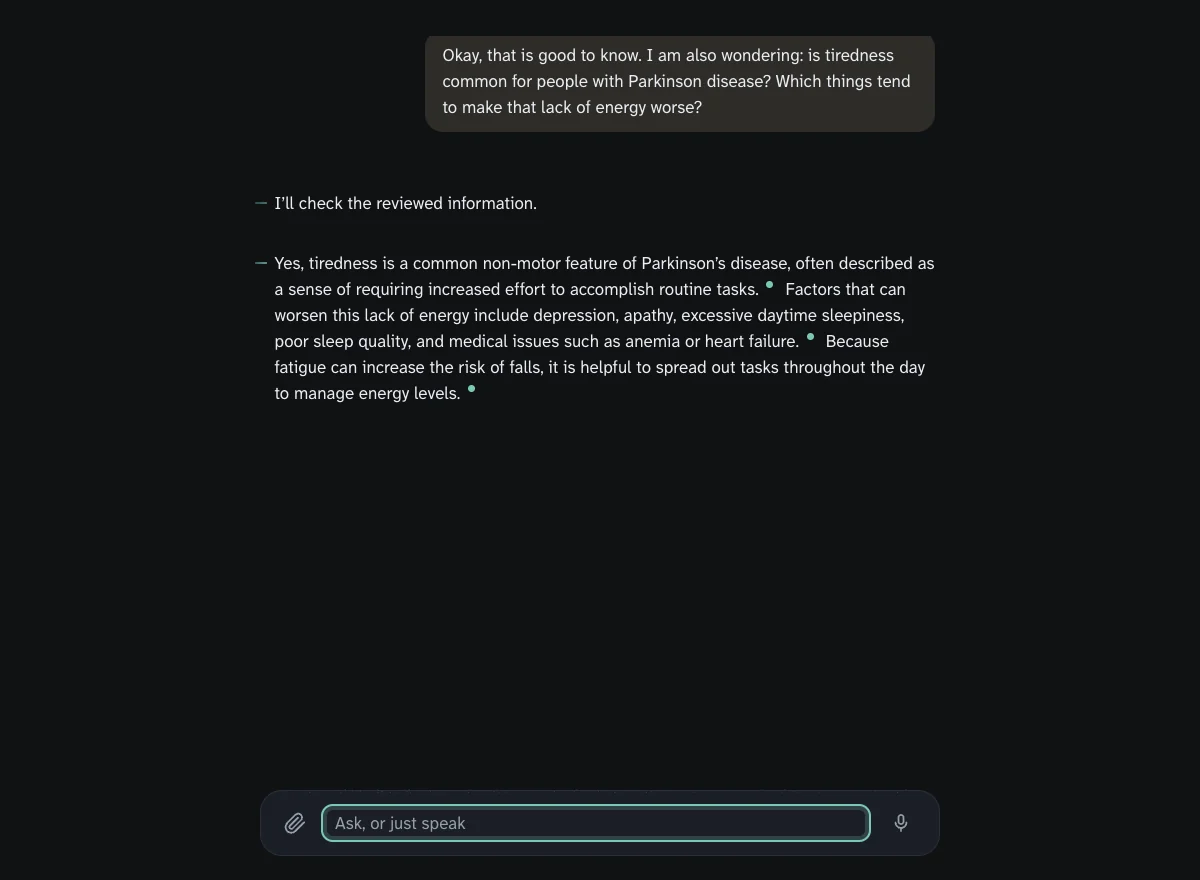
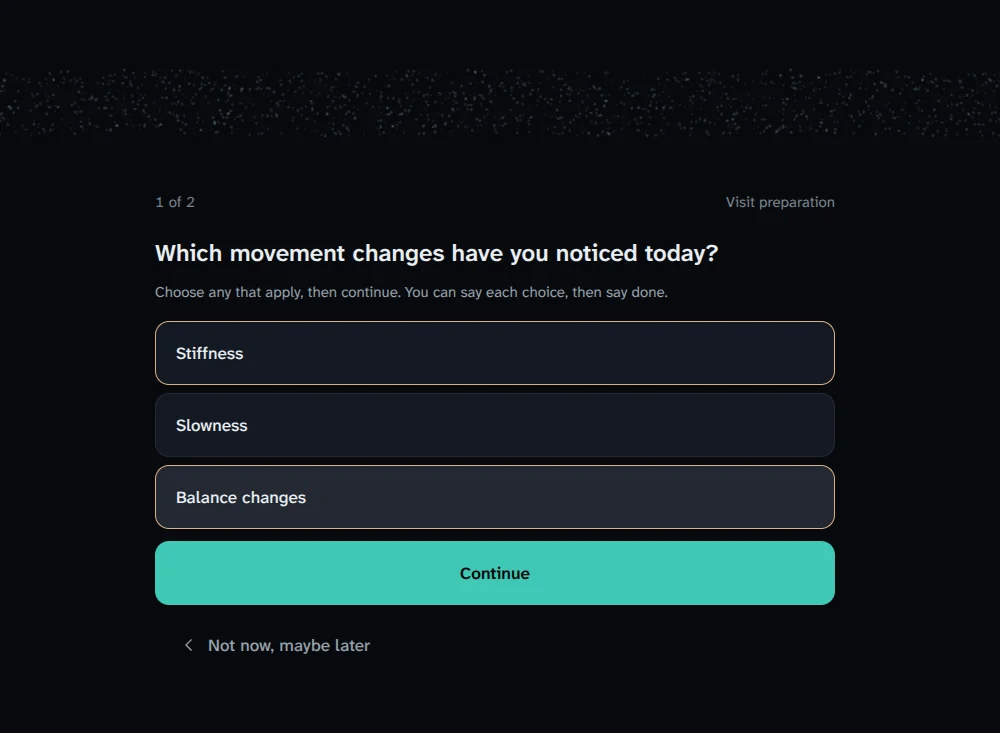
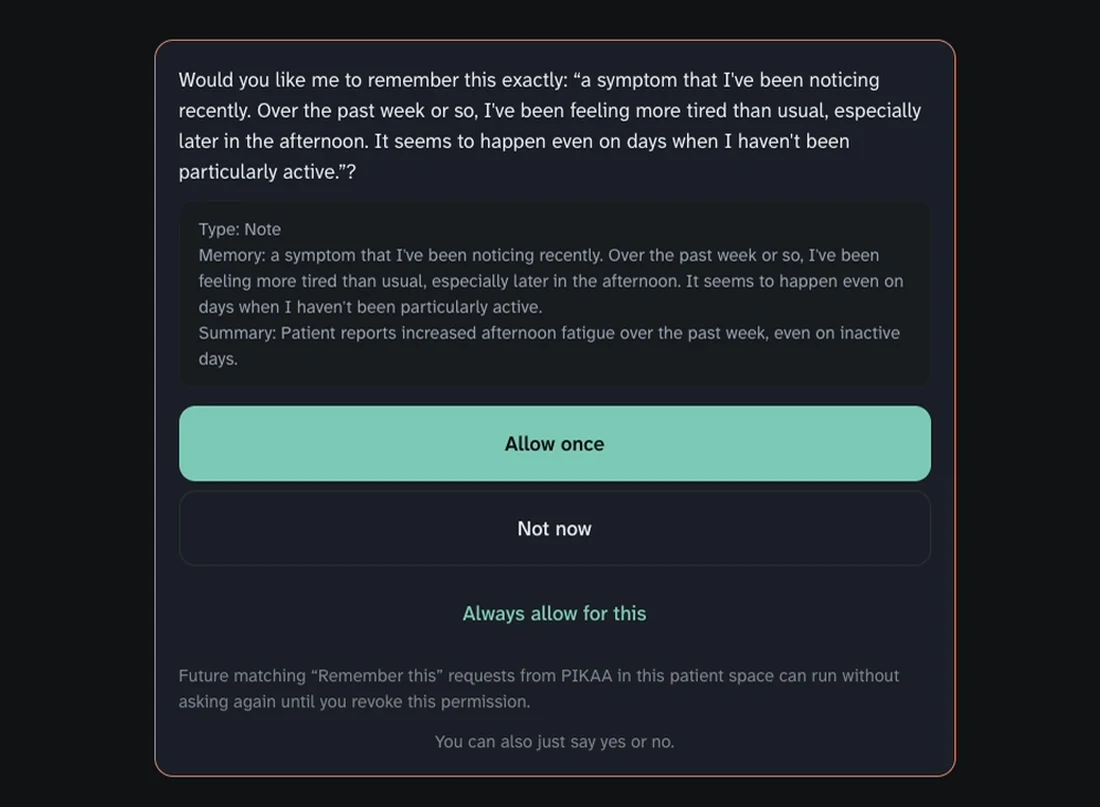
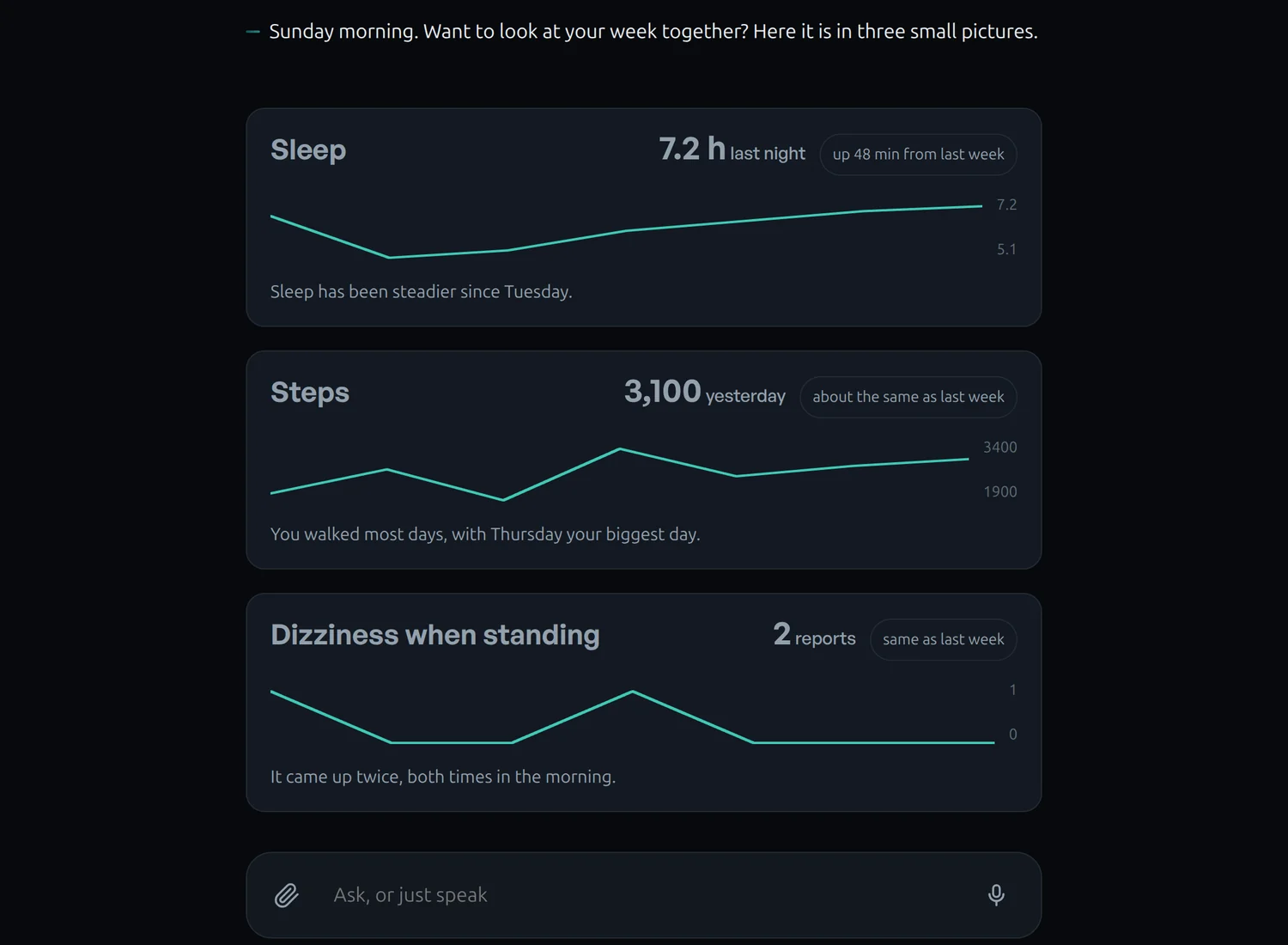
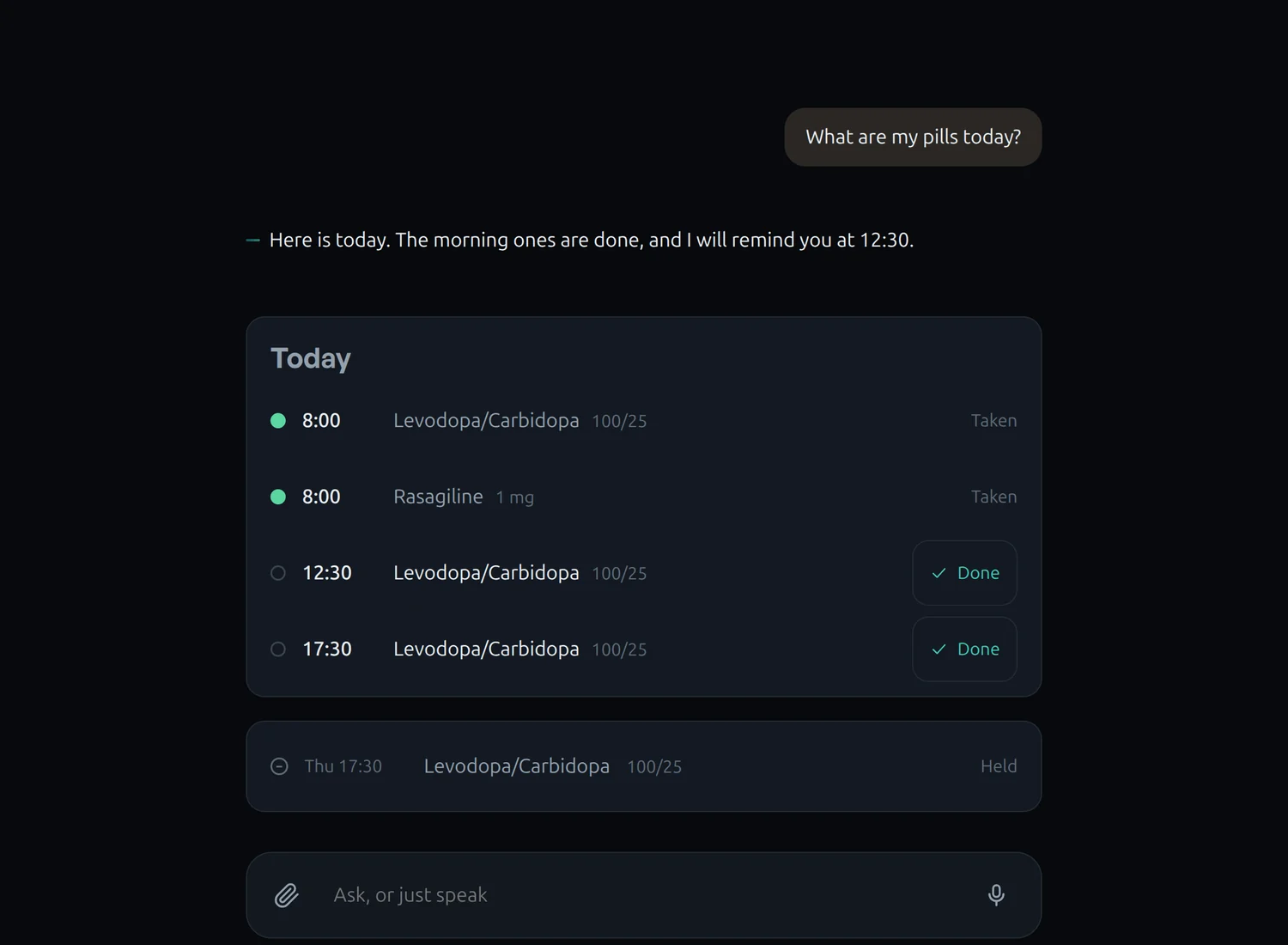
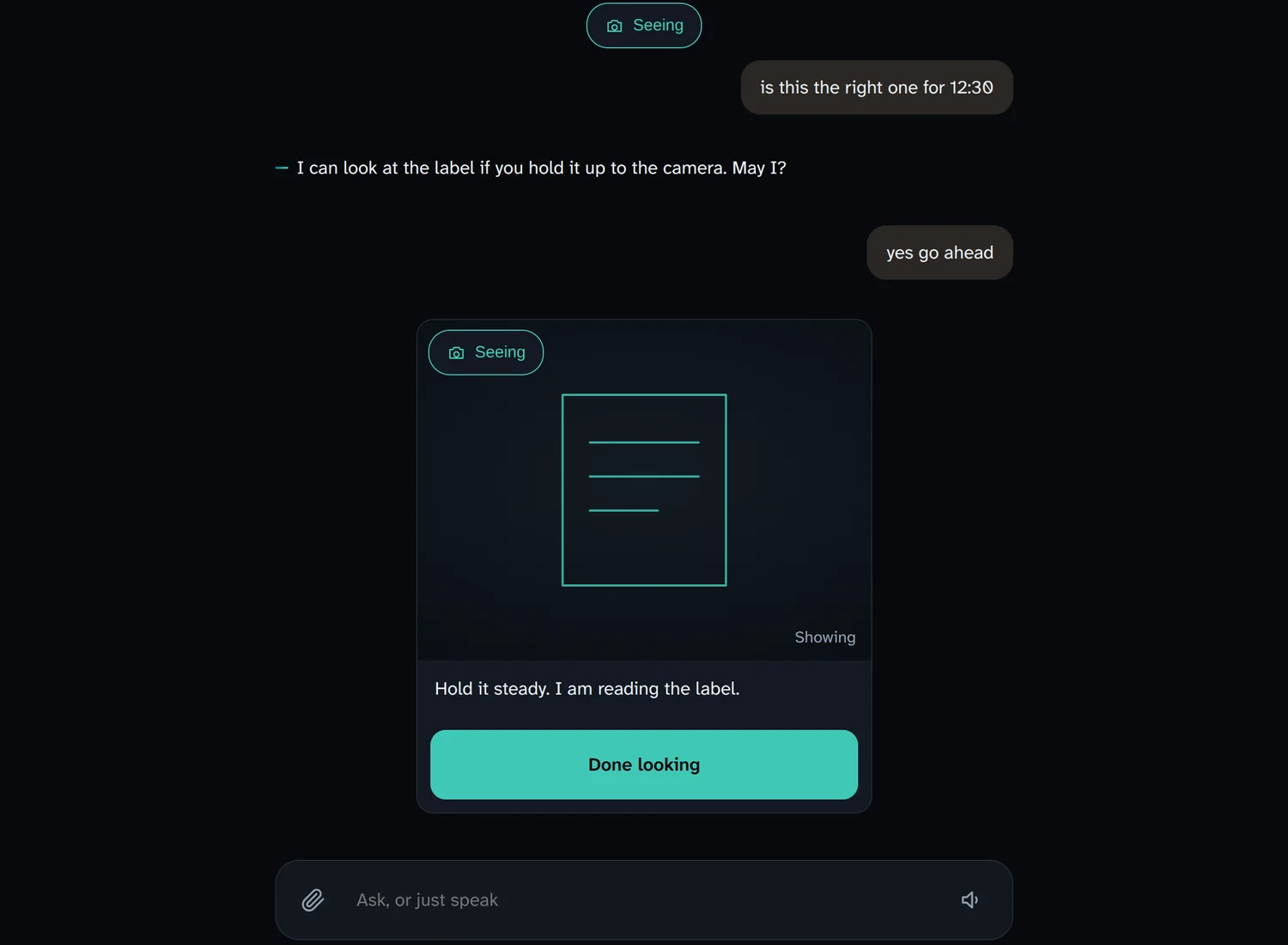
Screens show fictional people and data. Those marked "In development" show our approved designs for features still being finished.
Is it only for certain symptoms?
Parkinson’s is different for everyone, so PIKAA is not built around a fixed list. Support for new symptoms and everyday needs is added over time, and each person’s PIKAA can focus on what matters to them.
New areas arrive in the same calm conversation, so there is never anything new to learn.
Clinicians can recommend check-ins for each person, and the person always decides.
Every new area is checked by clinicians before it is switched on.
Can I see it working?
From a first hello to a short check-in, and a summary shared only after a yes.
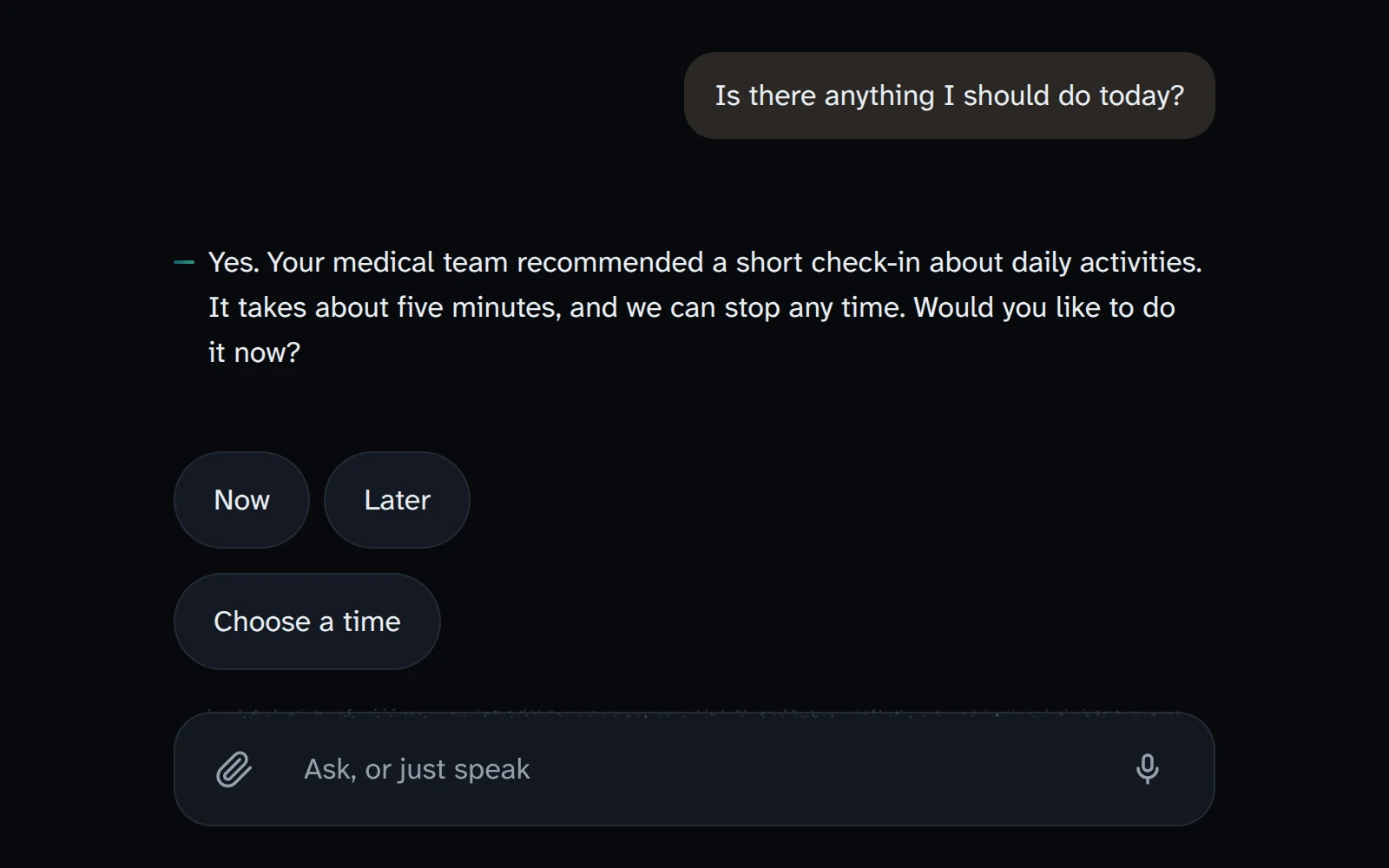
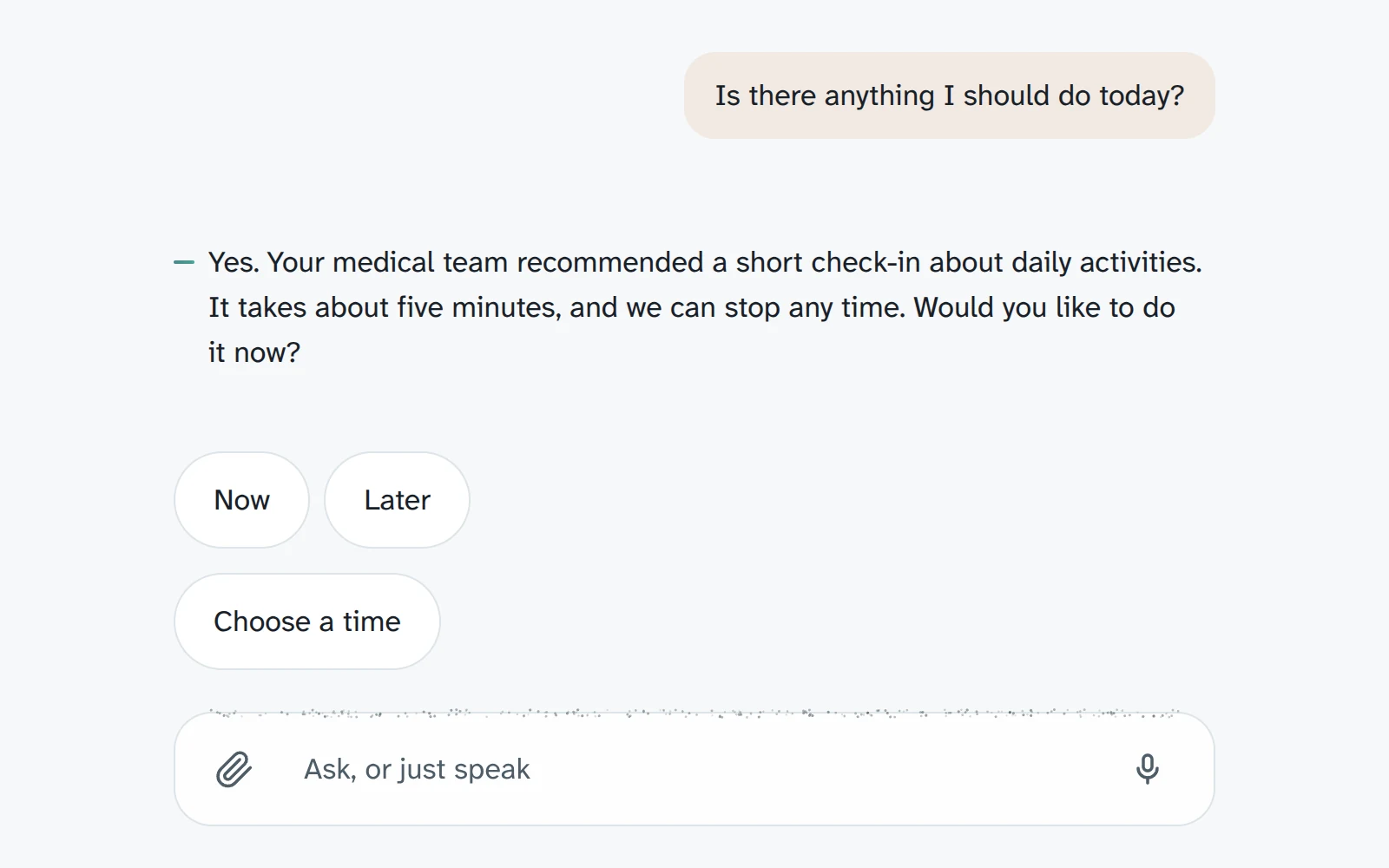
May mentions a rough night. PIKAA listens, answers gently, and offers a short check-in.
A couple of simple questions, answered by voice or touch, then a calm look at her week.
May sees exactly what would go to her medical team, and nothing is sent until she agrees.
An animation built from PIKAA’s own interface, with a fictional person and data.
What does my medical team see?
PIKAA works hand in hand with Care Composer, a companion app for clinicians. Your medical team can recommend check-ins, and you decide what comes back to them.
For you, at home
Offers what your medical team recommends, at a time that suits you, and keeps every choice about what is shared with you.
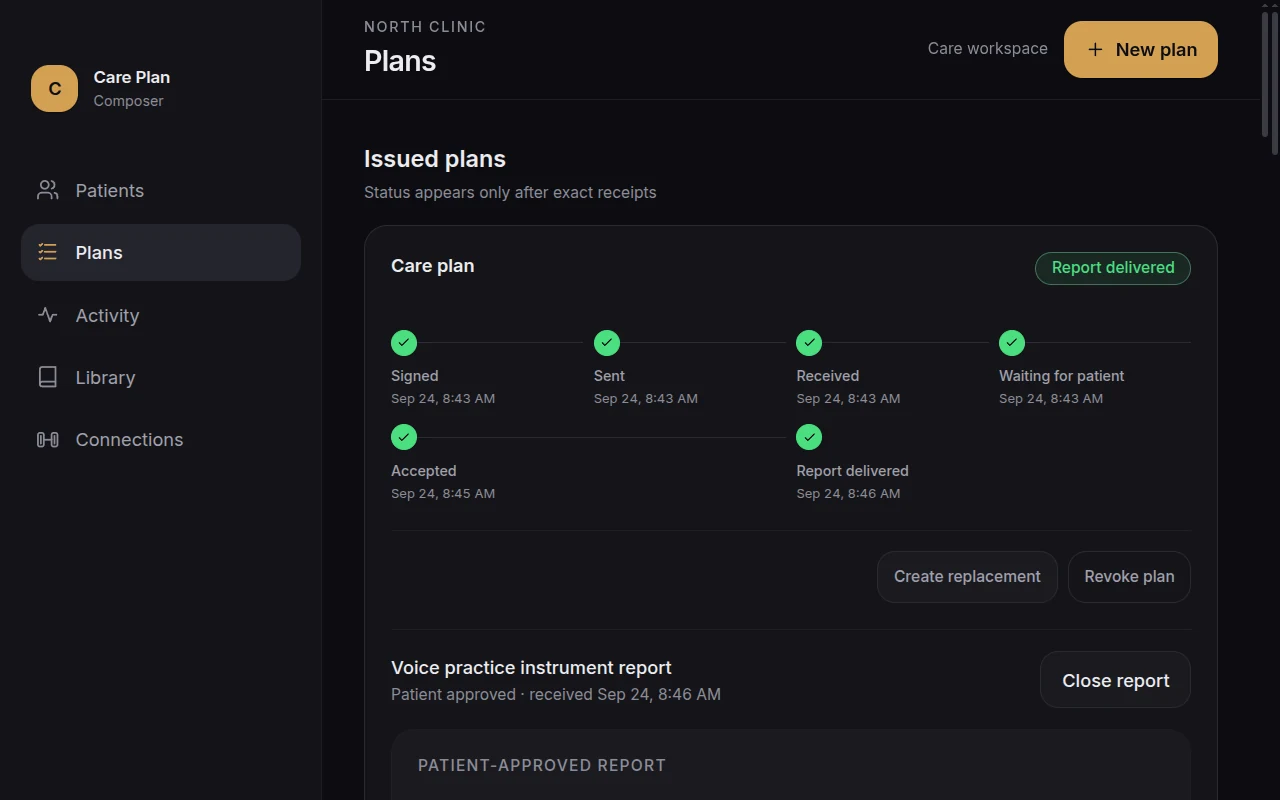
For your medical team
Plan care, recommend check-ins and receive the summaries patients approve. It never speaks or decides for the patient.
Recommends a check-in.
Choose when, and answer at home.
Review what would be shared.
Receives it only after your yes.
Can I trust it?
It is the first thing PIKAA tells anyone who starts using it, and the promise everything else is built on.
Conversations, memory and the AI itself stay with you. There is no tracking.
Nothing is shared without your yes, and you always see exactly what will go, and to whom.
The camera opens only when you agree, and nothing is kept unless you choose.
Take a readable copy of everything, or delete it.
PIKAA learns your voice, so it responds to you and not to the television.
Practical and never diagnostic. PIKAA never names a condition you have not mentioned yourself.
If something seems wrong, PIKAA’s help steps up gently, from a quiet note to involving the people you trust. The steps that reach beyond you are switched on only after clinical sign-off.
What powers it?
We built FERRET so that AI which helps people with their health can stay with them, not in someone else’s cloud. It brings listening, speaking, reading, seeing and knowing together in one place, with memory and consent at its heart.
The AI works right where the person is, and personal information leaves only with their consent.
Natural conversation, reading aloud and looking at things when asked, all working together.
A private memory that keeps only what the person allows, and forgets when asked.
New capabilities are designed, tested and reviewed in FERRET Studio before they reach anyone.
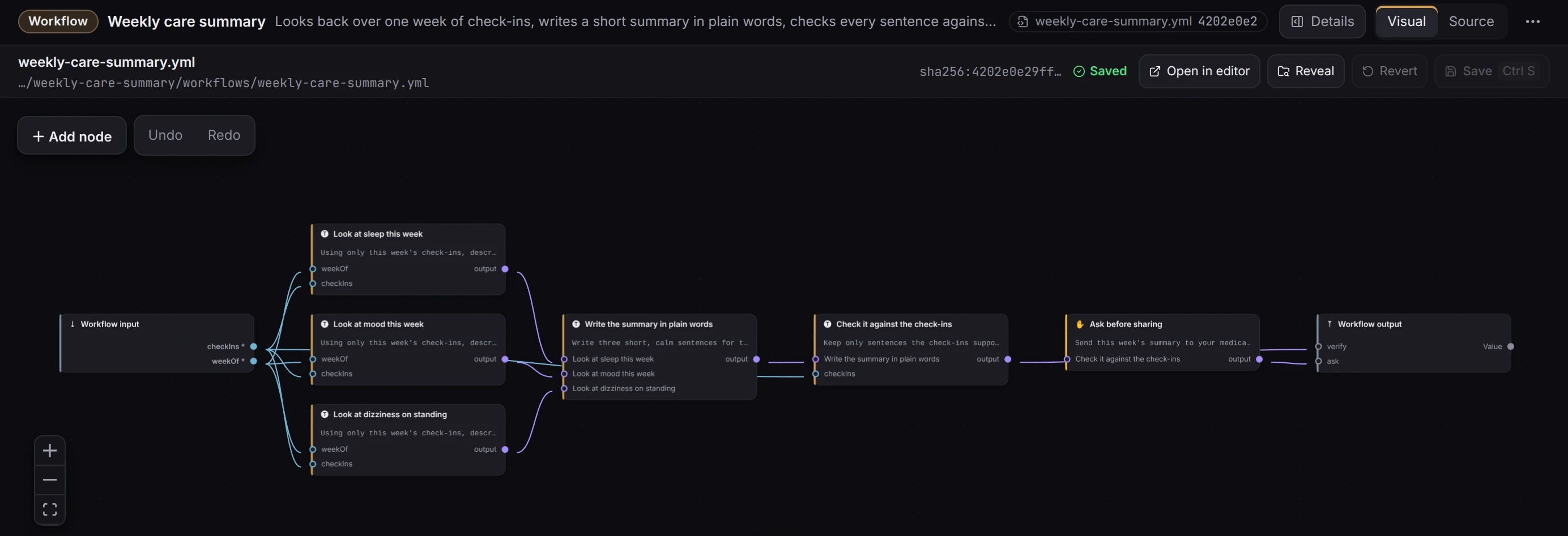
FERRET is developed by our team and is not publicly available.
Where is it today?
Launched at UBC’s Pacific Parkinson’s Research Centre, bringing together clinical neurology and AI engineering.
Our private AI platform, FERRET, takes shape, and the clinical design and ethics protocols are prepared.
Our pre-assessment chatbot is used with patients at Vancouver Coastal Health’s Movement Disorders Clinic, one of Canada’s leading Parkinson’s centres.
In clinical useThe voice-first companion is built and being tested by our research team, while clinicians review its content and wording.
NowA study with up to 50 people living with Parkinson’s, together with their caregivers and clinicians.
In preparationA proposed 36-month study across Canadian sites through the Canadian Open Parkinson Network.
Grant submittedWider use across British Columbia, Canada and internationally, with Mandarin and Cantonese support planned.
PlannedPIKAA is a research prototype. It is not yet available to patients or the public, and it is not a medical device.
Who is building it?
Clinical neurology, machine learning research and engineering, working together at the University of British Columbia.
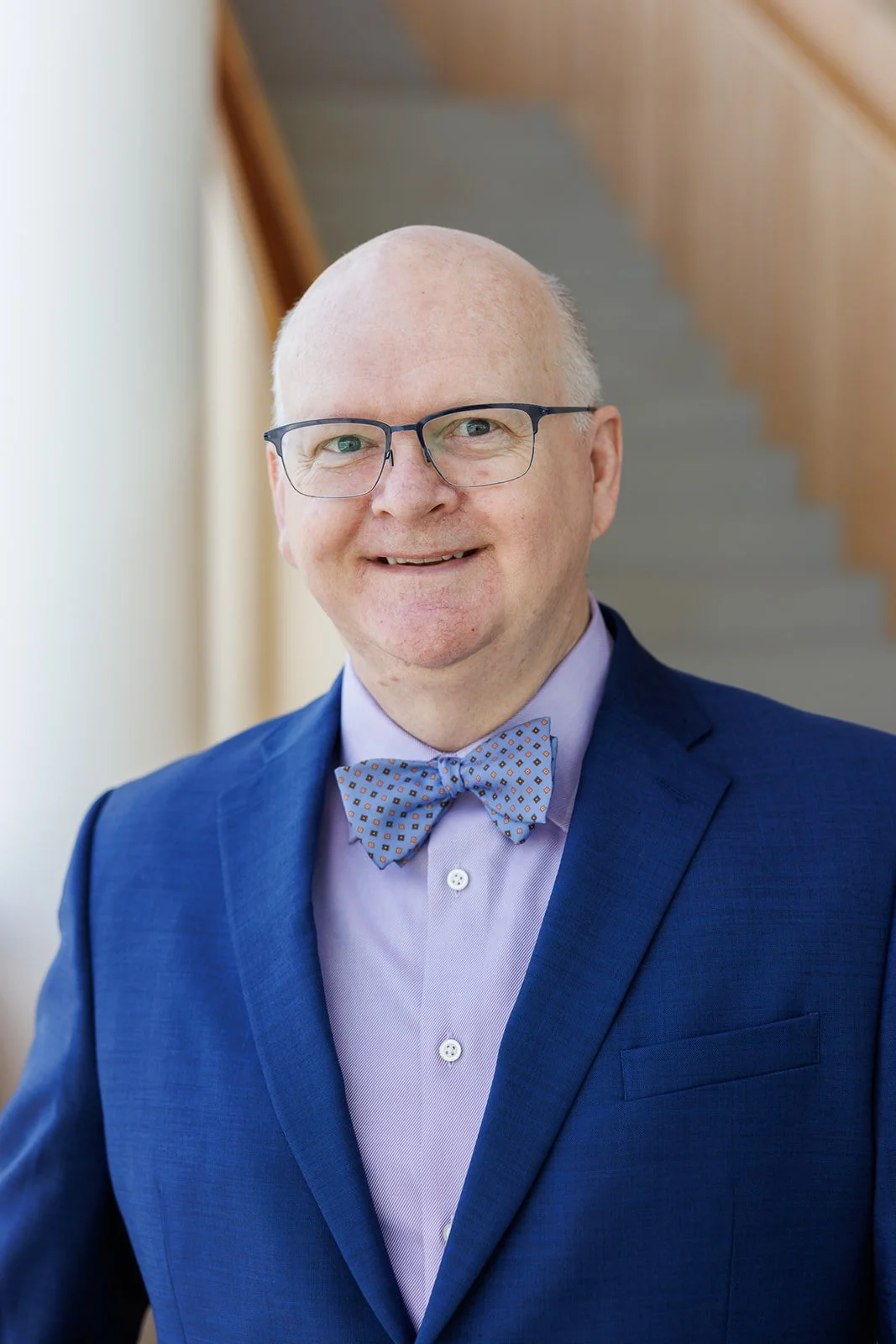
Principal Investigator
UBC Medicine (Neurology)
Professor and Head, Division of Neurology. John L. Nichol Chair in Parkinson’s Research. Honorary Visiting Professor, Lee Kong Chian School of Medicine, Singapore. Associate Member, Electrical and Computer Engineering. Member, Scientific Advisory Board, Parkinson Canada.

Co-Investigator
UBC Electrical and Computer Engineering
Professor, Electrical and Computer Engineering. IEEE Fellow. Expert in signal processing, machine learning and biomedical data analysis.
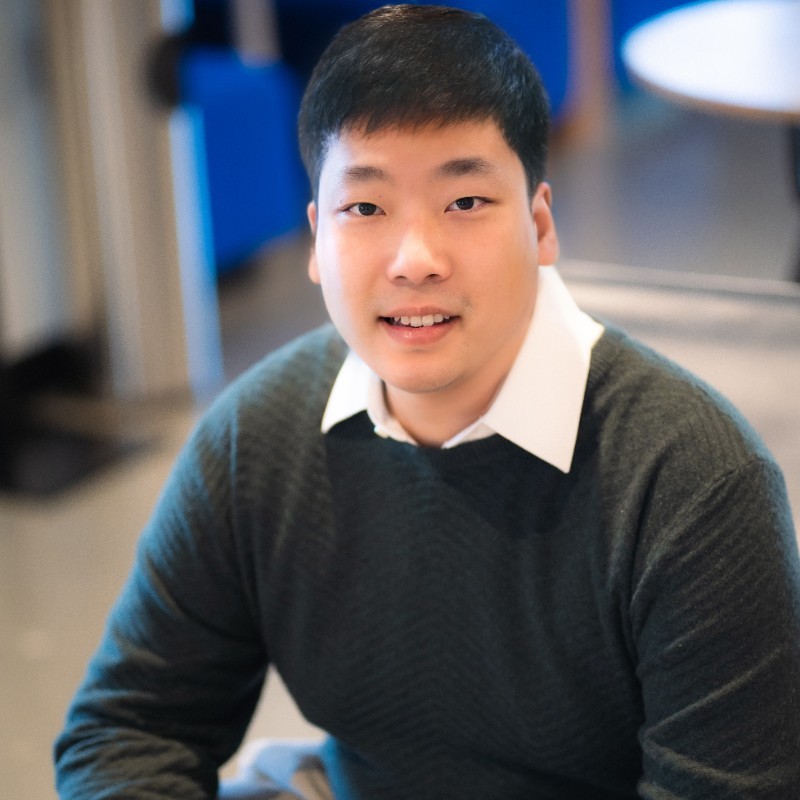
PhD Student and Senior Machine Learning Engineer
UBC Electrical and Computer Engineering, and UBC Medicine (Neurology)
Inventor, 9 US patents in privacy-preserving computer vision. 1st place, OpenCV AI Competition 2021. Author, ICLR 2026.
Final wording of PIKAA’s conversations and clinical content rests with the clinical team at the Pacific Parkinson’s Research Centre.
An on-device AI platform recognised by OpenCV and Intel for privacy-preserving edge architecture.
An AI technology portfolio behind PIKAA’s private, on-device approach.
Perplexity-guided self-correction for large language models, peer reviewed at a top AI venue.
Ethical AI governance in Parkinson’s digital health, in AJOB Empirical Bioethics (2023) and AI and Society (2024).
Our earlier chatbot is used by people with Parkinson’s at the VCH Movement Disorders Clinic.
The Pacific Parkinson’s Research Centre holds this designation for world-class Parkinson’s research and care.










Patient-paced, private by default, and built with the people who care for Parkinson’s every day.